
After water mitigation
Putting Your Wall Back After a Flood Cut
When a restoration company handles water damage, they often cut the drywall out in a straight line — usually 2 feet up, sometimes 4 — to dry the wall cavity out properly. That open strip is what we close back up. Once the cut is confirmed dry, we hang new drywall into it, tape and finish the seams, and match the texture on both sides, for homeowners and for restoration companies working their own jobs. Some photos of the cut and the year the home was built get you a firm price back by text, free of charge.
Free estimate for flood cut repair
- Text us some photos
- Add the year your home was built
- Get a firm price back
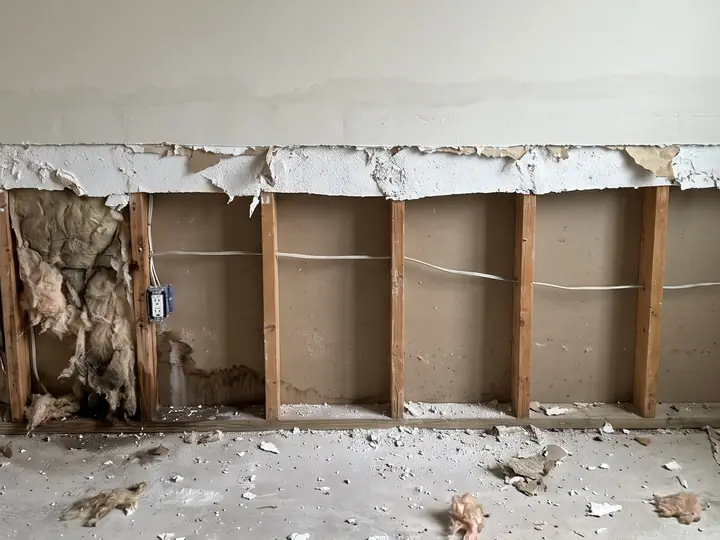
What a flood cut is
After a pipe break, an appliance failure, or any water event big enough to call in a restoration company, the drywall near the floor often has to come out, not just dry in place. Restoration companies cut it in a straight horizontal line, typically 2 feet up from the floor for a shorter cut or 4 feet for a taller one, to open the wall cavity so the framing can dry and any wet insulation can be pulled out and replaced. That cut line is deliberate, not damage — it's how a wall gets dried out fast enough to avoid mold setting in behind an intact surface. Once the drying equipment comes out and the wall tests dry, the cut strip is still open, and that's the point where putting the wall back together becomes a drywall job rather than a restoration one.
Before we close a cut, the insulation needs to be back in the wall. The restoration company usually handles that as part of the dry-out; if it hasn't been done, tell us with your photos and we'll sort out the order of work before we quote.
Once the wall is confirmed dry
We don't hang new drywall into a flood cut until the wall behind it is actually dry — not just dry to the touch, but confirmed dry, usually by whoever handled the mitigation with a moisture meter. Closing the cut back up before that just sets up the same problem again behind a new surface. Once drying is confirmed, we cut the opening to a clean line if it needs it, hang new drywall into the strip, and tape and finish the seams so the new section ties structurally into the wall above it. From there we match the texture on both the new section and anywhere the cut line interrupted the existing finish, so the repaired strip isn't the only part that reads differently once it's done.
Homeowners and restoration companies
Flood cuts come up in two different ways for us. Homeowners sometimes handle the drywall side themselves after their insurance and the restoration company have finished the water part of the job, and come to us directly once the wall's dry. Restoration companies also bring us in on their own jobs, especially when the drywall side is more than they want to handle in-house, or the schedule's tight. Either way, the job and the price work the same: a photo of the cut, the length of wall involved, and the year the home was built get you a firm price. Restoration companies can send us the same information their office already has on file for the job.
Matching the texture and painting the wall
The texture above a flood cut rarely matches what goes back in without some care — a cut line often crosses from a textured upper wall into bare drywall below, and getting the new section to tie in means matching whatever's on the wall already: orange peel, knockdown, smooth, or a hand-applied finish. Standard texture matching is included in the repair; detailed and premium finishes are priced on texture matching. Once the texture's had time to dry, you're welcome to paint the wall yourself if that's the plan. If you'd rather we painted it, we recommend the full wall, corner to corner, rather than just the repaired strip — see drywall repair and painting for how that's priced.
Getting a firm price
Send photos of the cut, along with the length of wall affected and the year the home was built, through the quote page; pricing it from photos costs you nothing up front. If the wall hasn't been confirmed dry yet, tell us where things stand and we'll plan around the mitigation company's timeline rather than book a date too early.
The build year matters here too: homes from before 1980 are enough of an asbestos risk that we don't take on a flood cut repair in one, restoration job or not.
On repair day, you're welcome to be home or to be out — leaving a lockbox code or an unlocked door works just fine if you'd rather not wait around, and we'll text before we arrive. Floors and anything nearby get taped and covered before we open the cut back up, and the area's cleaned up once the new drywall, tape and texture are finished. What else changes the price, including how much wall is involved, is in the cost guide.
What to expect on repair day
Every repair is checked before we call it done, and your home is protected while it happens.
Stay home or run errands
You're welcome to be home while we work. If you'd rather run errands, leave a lockbox code or the door unlocked, and we lock up when the job is done. Either way, you get a text when we're on the way.
Your belongings protected
Before starting, we tape plastic over the floor, nearby walls and anything close to the repair. If a couch is in the way, we move it and cover it.
Cleaned up before we leave
Patching makes some dust. The plastic catches most of it, and we clean up the work area before we go.
Flood cut repair questions
Our restoration company cut out the bottom of our walls to dry them. Can you put them back?
Yes. Once the wall is confirmed dry, we hang new drywall into the cut, tape and finish the seams, and match the texture on both sides.
How do you know the wall is dry enough to close back up?
We go by what the restoration company's moisture readings show. If drying hasn't been confirmed yet, tell us and we'll time the repair around it rather than close it up too soon.
Do you work directly with restoration companies, or only with homeowners?
Both. Homeowners come to us once a restoration company has finished the water side of the job, and restoration companies also bring us in directly for the drywall part of their own jobs.
Will you match the texture above the flood cut line?
Yes — standard texture matching, orange peel, knockdown or smooth, is included. Detailed and hand-applied finishes are priced on texture matching.
Can you paint the wall after the flood cut is repaired?
Yes. We recommend a full wall repaint, corner to corner, as a separate visit once the texture's dried — see drywall repair and painting.
Related drywall repairs
Often done in the same visit.
Water-damaged ceiling repair
Cutting out and replacing the ceiling a roof or upstairs leak damaged, texture matched to the rest.
Texture matching
Orange peel, knockdown, smooth and hand textures, matched to your existing wall.
Drywall repair and painting
Patch, texture match and a full repaint, corner to corner.
Hole in your wall? Text a photo.
Text, call or send the form anytime, day or night. Your estimate is free, and the price is firm before anything is scheduled.